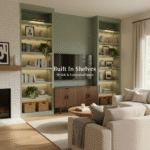
The organic modern aesthetic has emerged as one of the most enduring and beloved interior design styles of the decade. It strikes a sophisticated balance between the clean, structured lines of modernism and the raw, imperfect beauty of the natural world. In a world that feels increasingly digital and fast-paced, the organic modern living room serves as a sanctuary—a space that feels curated yet lived-in, luxurious yet grounded. If you are looking to transform your living area into a peaceful retreat that looks straight out of a high-end editorial, this comprehensive guide will walk you through the essential elements, textures, and styling secrets of organic modernism.
Defining the Organic Modern Aesthetic
At its core, organic modern design is the marriage of two seemingly opposite schools of thought. On one hand, you have the “modern” influence: minimalism, functionality, and sleek silhouettes. On the other, you have the “organic” influence: natural materials, curved forms, and a warm, earthy color palette. The magic happens in the contrast. When you place a sharp-edged, black metal coffee table on top of a plush, hand-woven jute rug, you create visual tension that feels intentional and high-end. This style isn’t about clutter; it’s about choosing fewer, better pieces that celebrate the materials they are made from. Unlike the coldness often associated with ultra-minimalism, organic modernism feels cozy and inviting because it prioritizes tactile comfort and human-centric design.
The Foundation: A Neutral, Earthy Color Palette
The secret to a successful organic modern living room starts with the walls. You want to create a canvas that feels airy and expansive. Move away from stark, “hospital” whites and instead embrace “gallery” whites—those with warm, creamy undertones. Think of shades like oatmeal, sand, mushroom, and soft terracotta. These colors react beautifully to natural light, changing subtly throughout the day. To add depth, incorporate darker “earth” tones such as charcoal, deep olive, or slate. These darker accents prevent the room from looking washed out and provide the “modern” edge needed to ground the space. Remember, the goal is to mimic the colors found in a forest or on a coastline, where everything feels harmonious and nothing feels synthetic.
Essential Color Categories:
- Primary Neutrals: Bone, Alabaster, and Warm Grey.
- Earth Tones: Ochre, Sage, and Burnt Sienna.
- High-Contrast Accents: Matte Black, Espresso, and Bronze.
Texture Over Pattern: The Secret to Depth
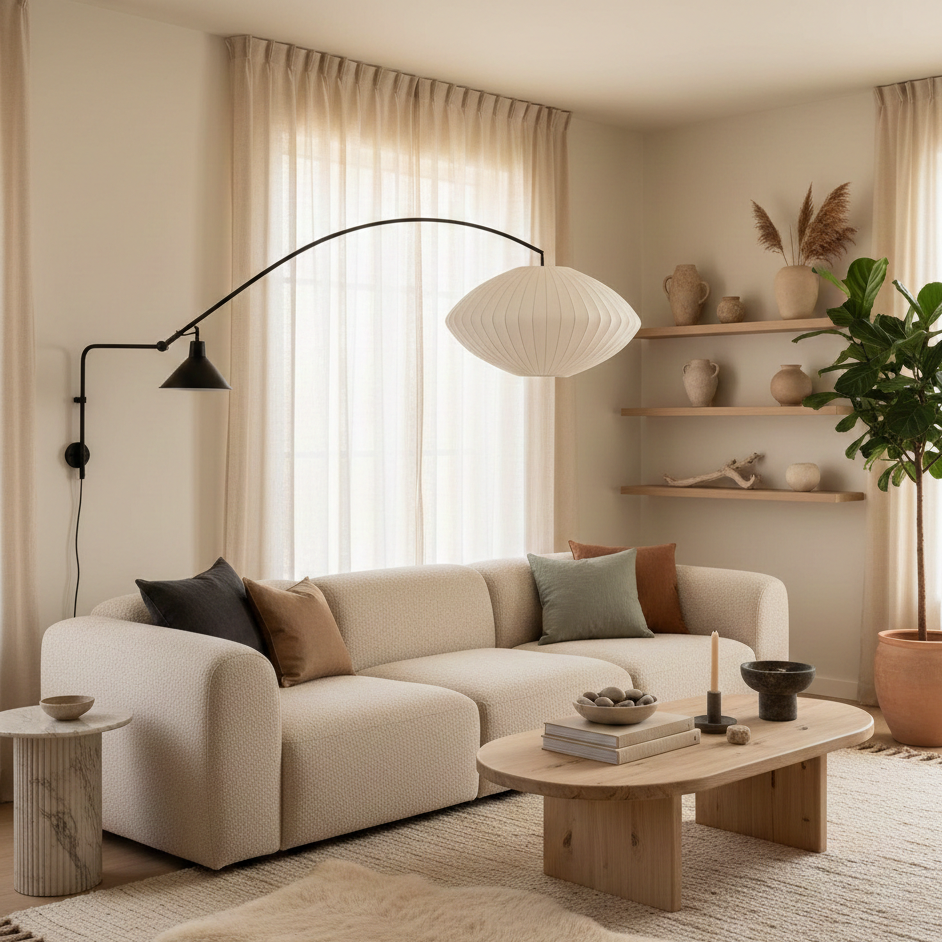
In organic modern design, texture does the work that patterns usually do in other styles. Because the color palette is restrained, you must layer different materials to keep the eye moving and make the room feel “finished.” Start from the ground up with a large-scale rug. A chunky wool loop or a flat-weave sisal rug provides an immediate organic foundation. Layering is key here—don’t be afraid to place a smaller, plush sheepskin or a vintage rug over a larger neutral one. For upholstery, mix linens with bouclé or velvet. The rough grain of a reclaimed wood side table next to the smooth, cold surface of a marble plinth creates a sensory experience that defines this look. When you focus on how things feel to the touch, the room naturally becomes more comfortable and visually interesting.
Furniture: Minimalist Silhouettes Meet Natural Curves
When selecting furniture for an organic modern living room, look for pieces that celebrate their construction. The “modern” side of the equation dictates that furniture should have a clear purpose and a clean silhouette. A low-profile, modular sofa in a neutral performance linen is a classic choice. To lean into the “organic” side, look for furniture with soft, rounded edges. Think “kidney-shaped” coffee tables, arched floor lamps, and dining chairs with curved cane backs. Avoid furniture that feels too “matchy-matchy.” Instead of buying a complete set, curate a collection of pieces that share a common material thread, such as light oak or blackened steel. The goal is to make the room look like it evolved naturally over time rather than being delivered in a single box from a showroom.
Bringing the Outdoors In: Natural Elements
You cannot have an organic modern space without the “organic” part—literally. This means integrating nature into your decor. Large-scale greenery is the most effective way to breathe life into the room. A tall Fiddle Leaf Fig or a sculptural Olive Tree in a large, handmade terracotta pot serves as a living piece of art. If you don’t have a green thumb, focus on “dead” organic matter: a bleached piece of driftwood on a shelf, a bowl of smooth river stones on the coffee table, or dried pampas grass in a floor vase. These elements provide a literal connection to the earth and introduce shapes that cannot be manufactured. Wood also plays a massive role; aim for “raw” finishes where the grain and knots are visible, rather than high-gloss stains that hide the wood’s natural character.
Lighting: The Atmosphere Creator
Lighting in an organic modern living room should be layered to create a warm, golden-hour glow. Avoid harsh overhead lighting whenever possible. Instead, use a mix of floor lamps, table lamps, and sconces. Look for fixtures made from natural materials like pleated paper, woven rattan, or alabaster. A large, oversized paper lantern pendant is a staple of this style, providing a soft, diffused light that feels like moonlight. For a modern touch, incorporate matte black metal swing-arm lamps for reading nooks. The contrast between a delicate paper shade and a heavy metal base perfectly encapsulates the organic modern spirit. Always use “warm” light bulbs (around 2700K) to ensure the space feels cozy rather than clinical.
Curating Decor: The “Less is More” Approach
Decorating an organic modern living room requires restraint. Each object should feel like it was chosen with intention. Rather than a gallery wall of twenty small frames, opt for one oversized piece of abstract art with a lot of “white space” or a large-scale textile hanging. On your shelves, leave plenty of room between objects to let them “breathe.” Focus on handmade ceramics—vases with visible finger marks, bowls with uneven glazes, and sculptural objects that look like they were found in an ancient ruin. These “perfectly imperfect” items add soul to the room. When styling your coffee table, a simple stack of linen-bound books and a single candle in a stone vessel are often all you need to achieve that Pinterest-perfect look.
Summary Checklist for Organic Modern Success
- Stick to a warm neutral palette with high-contrast black or wood accents.
- Prioritize natural materials like linen, wool, jute, stone, and wood.
- Incorporate curved furniture to soften the straight lines of the architecture.
- Layer textures instead of using busy patterns.
- Add “living” elements like large indoor trees or dried botanicals.
- Choose handmade decor that celebrates imperfection and craftsmanship.
- Maximize natural light and use warm, diffused artificial lighting for the evening.
Why Organic Modern Design Works
The reason this style has taken over Pinterest and interior design magazines is simple: it feels like home. It doesn’t ask you to be perfect, because it celebrates the raw and the natural. It provides a quiet, serene backdrop for the chaos of daily life. By stripping away the unnecessary and focusing on quality, comfort, and nature, you create a living room that isn’t just a place to sit—it’s a place to recharge. Whether you live in a city apartment or a suburban house, the organic modern approach can transform your four walls into a sophisticated, soulful haven.