The Scandinavian design movement, originating from the Nordic countries of Denmark, Norway, and Sweden, has taken the interior design world by storm for good reason. It prioritizes simplicity, utility, and a deep connection to nature, making it the ideal aesthetic for a dining room where family and friends gather to share meals. Achieving this look isn’t just about buying white furniture; it’s about understanding the philosophy of “less is more” while ensuring the space doesn’t feel cold or clinical. By focusing on light, natural materials, and thoughtful accents, you can create a room that feels both high-end and incredibly lived-in.
The Foundation: Color Palette and Light
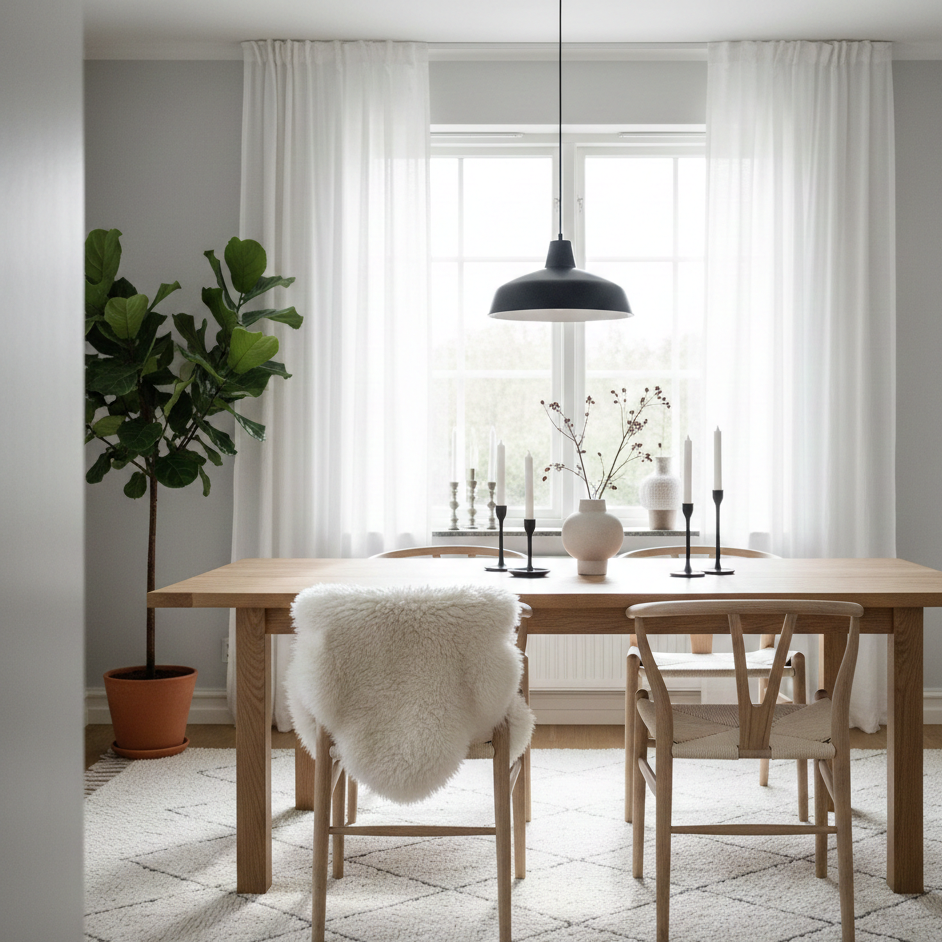
The bedrock of any Scandinavian room is its color palette, which is almost always rooted in neutrals to maximize the feeling of space and light. In Northern Europe, where winters are long and dark, reflecting natural light is a primary goal of interior design. Start with walls in crisp white, soft grey, or a very muted “greige” to create a bright canvas. This doesn’t mean you can’t use color, but when you do, it should be inspired by nature—think sage greens, dusty blues, or earthy terracotta. These tones add depth without overwhelming the senses. Lighting itself is the most important “accessory” in a Scandi dining room; a statement pendant light hanging low over the table serves as a focal point. Look for designs featuring organic shapes, matte finishes, or woven wicker to add a layer of craftsmanship.
Selecting the Perfect Dining Table and Seating
The dining table is the heart of the room and should be chosen for its durability and simple lines. Light-toned woods like ash, oak, or pine are the gold standard for Scandinavian furniture because they bring a sense of warmth and the outdoors inside. A rectangular table with tapered legs offers a classic mid-century modern vibe, while a round pedestal table is perfect for encouraging conversation in smaller nooks. When it comes to seating, the iconic “Wishbone” chair or molded plastic chairs with wooden legs are staples of the style. To achieve that effortless, “undone” look, consider mixing and matching your chairs. You might pair a sleek wooden bench on one side with a set of mismatched vintage chairs on the other, which instantly makes the room feel more personalized and less like a showroom.
Incorporating Textures for Hygge
A common mistake in minimalist design is forgetting to add texture, which can leave a room feeling sterile. In Scandinavian design, texture is what provides “hygge”—the Danish concept of coziness and contentment. You can introduce this through a large, flat-weave wool rug under the dining table to define the space and provide warmth underfoot. Choose a rug with a subtle geometric pattern or a solid neutral tone. Another quintessential Scandi move is to drape a sheepskin rug or a chunky knit throw over a chair. This adds immediate visual softness and tactile comfort. Linen curtains in a light cream or oatmeal color allow sunlight to filter through while providing privacy, adding to the airy, organic feel of the room.
Minimalist Decor and Greenery
Decorating a Scandinavian dining room requires a “curated” approach; every piece should have a purpose or bring you joy. Instead of cluttering surfaces, choose a few high-quality items like a ceramic vase with a single branch, a set of matte black candle holders, or a simple wooden fruit bowl. Wall art should follow the same principle—think large-scale abstract prints in neutral tones or black-and-white photography with plenty of negative space. Perhaps the most vital decorative element is greenery. Plants are a staple of Nordic interiors as they breathe life into the neutral palette. A large Fiddle Leaf Fig in a corner or a collection of small potted herbs on a sideboard adds a vibrant pop of color and reinforces the connection to the natural world.
Storage and Functionality
Functionality is never sacrificed for style in Scandinavian homes. Sideboards and credenzas are essential for keeping clutter at bay while providing a surface for styling. Choose a floating sideboard for a modern, airy look, or a vintage teak piece to add a bit of history to the room. Use these units to store linens, candles, and extra dinnerware so that the dining table remains clear when not in use. Open shelving is also a popular choice, allowing you to display your most beautiful ceramics and glassware as part of the decor. By keeping the layout open and the flow of the room unobstructed, you ensure that the space remains practical for everyday use while maintaining its aesthetic integrity.