In the modern world, the bathroom has transcended its utilitarian roots to become a vital sanctuary for mental and physical restoration. As our lives become increasingly digital and fast-paced, the craving for a connection to the natural world has never been stronger. This shift in lifestyle has birthed a major interior design movement: the earthy bathroom. By drawing inspiration from the raw textures of the mountains, the soft palettes of the desert, and the lush vitality of the forest, you can transform a standard washroom into a serene oasis that grounds your soul. An earthy bathroom isn’t just about choosing a specific shade of brown; it is a holistic approach to design that prioritizes organic materials, tactile sensations, and a harmonious flow between the indoors and the out.
The Foundation of Earthy Design: Materiality and Texture
The secret to a successful earthy bathroom lies in the authenticity of the materials used. To move away from the cold, clinical feel of traditional white porcelain and chrome, designers are turning toward stone, wood, and clay. Natural stone, such as travertine, slate, or tumbled marble, provides an immediate sense of permanence and weight. When used on floors or as wall cladding, stone introduces subtle variations in color and pattern that no man-made tile can perfectly replicate. For those seeking a more rustic or Mediterranean feel, terracotta tiles offer a warmth that radiates throughout the room, creating an inviting glow even on overcast days.
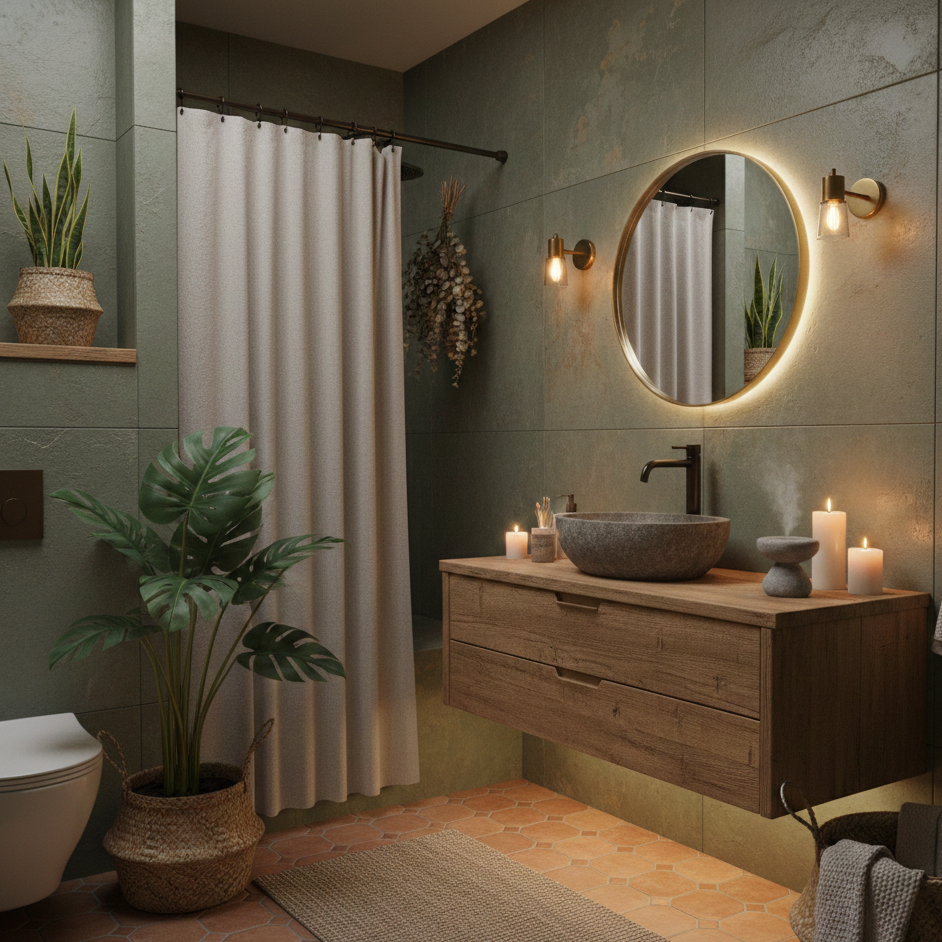
Wood is another essential element in the earthy toolkit, though it must be used thoughtfully in high-moisture environments. Teak, cedar, and bamboo are excellent choices due to their natural resistance to water. A floating wood vanity or a slatted wooden shower mat introduces a spa-like quality that softens the harder surfaces of the room. The contrast between a rugged stone basin and a smooth, grain-heavy wooden countertop creates a visual dialogue that feels both sophisticated and raw. By layering these textures—the roughness of stone against the smoothness of wood—you create a space that feels lived-in and deeply connected to the planet.
A Palette Inspired by the Great Outdoors
Color is perhaps the most powerful tool for setting a serene mood. An earthy palette moves far beyond simple beige; it encompasses a wide spectrum of tones found in nature’s landscapes. Think of the muted greens of sage and moss, the deep ochres of sun-baked earth, and the soft greys of river pebbles. These colors are naturally calming to the human eye because they mimic the environments where we feel most at peace. When selecting paint or tile colors, look for “muddy” or “desaturated” tones. A dusty terracotta wall can make a large bathroom feel cozy and intimate, while a pale eucalyptus green can make a small powder room feel airy and fresh.
Metallic accents also play a role in the earthy aesthetic, but they should be handled with restraint. Instead of high-shine polished chrome, look toward “living finishes” like unlacquered brass, oil-rubbed bronze, or matte copper. These metals develop a patina over time, changing and aging alongside the home. This sense of evolution is a core tenet of natural design—the idea that beauty is found in imperfection and the passage of time. These warmer metal tones act as jewelry for the room, catching the light without breaking the organic flow of the space.
Bringing the Outside In: The Role of Greenery
No earthy bathroom is complete without the literal presence of nature. Plants are the lungs of the room, providing a burst of vibrant color and improving air quality. The humidity of a bathroom makes it a perfect greenhouse for various tropical species. Hanging a Boston fern from the ceiling or placing a towering Monstera in a corner can instantly soften sharp architectural lines. For those with limited natural light, snake plants or Pothos are incredibly resilient and can thrive in lower-light conditions.
Beyond potted plants, consider integrating greenery in more architectural ways. A “living wall” or a simple shelf dedicated to a collection of succulents can create a focal point that draws the eye. If you have the luxury of a window, keep the window treatments minimal to allow views of the outdoors to become part of your interior decor. If privacy is a concern, frosted glass or cafe-style shutters can let in sunlight while maintaining a sense of seclusion. The goal is to create a seamless transition where the boundary between your home and the natural world begins to blur.
Lighting for Serenity and Soul
Lighting is the “invisible” element that can either enhance or destroy a natural aesthetic. In an earthy bathroom, harsh overhead fluorescent lights are the enemy of serenity. Instead, aim for layers of light that mimic the soft, diffused glow of a sunset or the dappled light of a forest canopy. Sconces placed at eye level on either side of the mirror provide a flattering, even light for grooming, while recessed LED strips under a vanity or behind a mirror can create a soft “halo” effect that feels ethereal.
Candlelight remains the ultimate tool for creating a serene atmosphere. Incorporating niches or ledges specifically for candles allows you to transform a quick evening shower into a meditative ritual. For a more modern approach, dimmable switches are a non-negotiable feature. Being able to lower the light levels during a long soak in the tub signal to your nervous system that it is time to decompress. The interplay of light and shadow on textured stone walls adds a cinematic quality to the room, making the space feel dynamic and alive.
The Art of Minimalist Styling
To maintain a sense of calm, an earthy bathroom should be free of clutter. However, minimalism in this context doesn’t mean emptiness; it means intentionality. Every object on display should serve a purpose or bring joy through its craftsmanship. Replace plastic soap dispensers with ceramic or glass bottles. Use woven seagrass baskets to store towels and toilet paper, adding another layer of organic texture. Even your textiles can contribute to the theme—opt for waffle-weave cotton towels in flax or charcoal tones, and consider a heavy linen shower curtain instead of a synthetic one.
Scent is the final layer of the earthy experience. To truly ground the space, use essential oils like sandalwood, cedarwood, eucalyptus, or patchouli. A stone diffuser or a bundle of dried eucalyptus hanging from the showerhead can fill the room with a natural fragrance that clears the mind. By engaging all the senses—sight, touch, and smell—you create a 360-degree environment that promotes wellness.
Key Elements of an Earthy Bathroom
| Element | Recommended Materials |
| Surfaces | Slate, Travertine, Terracotta, Zellige tiles |
| Storage | Reclaimed wood vanities, Woven wicker baskets |
| Fixtures | Antique brass, Matte black, Copper |
| Textiles | Organic linen, Waffle-knit cotton, Jute rugs |
| Botanicals | Eucalyptus, Calathea, Air plants |
Creating an earthy bathroom is an investment in your daily well-being. It is about more than just aesthetics; it is about creating a space that resonates with your primal need for nature and quiet. Whether you are doing a full renovation or just updating your accessories, focusing on natural materials, a grounded color palette, and plenty of greenery will help you craft a sanctuary that feels timeless, soulful, and profoundly peaceful.