Introduction: The Myth of the Big Budget
Have you ever scrolled through Pinterest or flipped through a glossy interior design magazine and felt a sudden pang of envy? You look at those soaring ceilings, the custom velvet sofas, and the marble countertops, and then you look at your own living room and sigh. We’ve all been there. There is a common misconception that to have a stylish, envy-inducing home, you need a millionaire’s bank account.
But let me let you in on a little secret: Style has nothing to do with how much money you spend. Some of the most charming homes are curated on a shoestring budget, fueled by creativity rather than cash. Your home should be your sanctuary, a reflection of your personality, not a display of your credit limit. Ready to roll up your sleeves? Let’s dive into how you can give your space a high-end feel without the high-end price tag.
The “Purge and Polish” Strategy
Before you spend a single penny, you need to strip it back. Think of your home like a canvas; you can’t paint a masterpiece on a dirty, cluttered surface.
Decluttering to Create Space
Clutter is the enemy of design. It visually shrinks a room and makes even expensive furniture look cheap. Start by being ruthless. If you haven’t used it, loved it, or looked at it in a year, it’s time for it to go. By removing the excess, you instantly add “visual square footage” to your home. It’s addition by subtraction.
Deep Cleaning for a Fresh Start
Once the clutter is gone, scrub everything. And I don’t just mean a quick vacuum. Wash the windows to let more natural light in. Scrub the grout in the bathroom. Dust the baseboards. Sometimes, a room doesn’t need new furniture; it just needs to sparkle. You’d be amazed at how a clean room feels brand new.
The Magic of Paint: Your Best Friend
If home decor were a video game, paint would be the cheat code. It is the single cheapest way to make the most dramatic impact.
Creating a Statement with Accent Walls
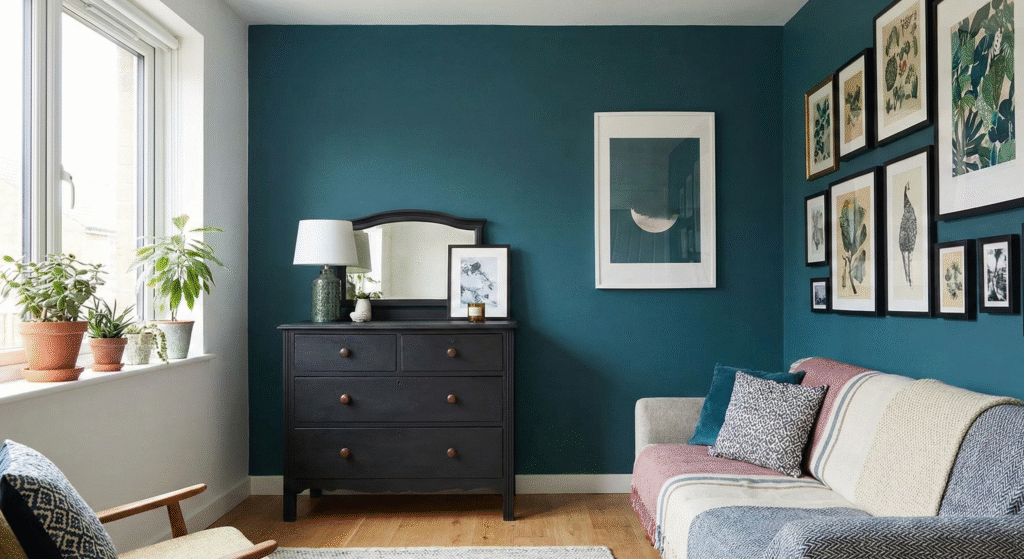
Painting an entire room can be exhausting and costly. Why not try an accent wall? Pick a bold, moody color like navy blue, charcoal, or forest green for the wall behind your sofa or bed. It creates a focal point and adds depth instantly. It’s like putting on a bold shade of lipstick; it changes the whole face.
Don’t Forget the Trim and Ceilings
Most people ignore the “fifth wall”—the ceiling. A fresh coat of bright white on the ceiling can make the room feel taller. Conversely, if your baseboards are looking scuffed and yellowed, a quick coat of high-gloss white paint will make everything look crisp and architectural.
Upcycling Furniture with a Fresh Coat
Got an ugly, orange-oak dresser from the 90s? Don’t toss it. Sand it down and paint it matte black or a soft sage green. Change the knobs, and suddenly you have a bespoke piece of furniture that looks designer-made.
Lighting: The Unsung Hero of Ambiance
You can have the most beautiful furniture in the world, but if your lighting is harsh and clinical, the room will feel like a dentist’s waiting room.
Swapping Out Dating Fixtures
Boob lights. You know the ones—those flush-mount ceiling lights that look like… well, you get the picture. Swap them out! You can find affordable, stylish drum shades or industrial pendants on Amazon or at IKEA for under $50. It instantly modernizes the space.
The Power of Warm vs. Cool Bulbs
Here is a tip that costs almost nothing: Check your lightbulbs. If your bulbs are “Daylight” (5000K), they emit a blue, harsh light. Swap them for “Warm White” (2700K or 3000K). Warm light makes a space feel cozy, expensive, and inviting. It’s the visual equivalent of a warm hug.
Rearranging: The Art of Shopping Your Own Home
Who says your sofa has to stay against that wall forever? The best budget tip is completely free.
Rethinking Room Layouts
Pull your furniture away from the walls. Floating your sofa in the middle of the room can create a cozy conversation area and make the room flow better. Experiment with angles. Move the armchair from the bedroom to the living room. Just moving things around creates a new energy and freshness.
Repurposing Items for New Uses
That bar cart you never use for drinks? Turn it into a plant stand or a coffee station. That old ladder in the garage? Clean it up and use it to hang blankets in the living room. Look at your possessions with fresh eyes and imagine them in different roles.
Textiles and Soft Furnishings
Texture is what makes a house feel like a home. Without it, a room feels flat.
Layering Rugs for Texture
If you have a rug that’s too small for the room (a common design mistake), you don’t have to throw it out. Buy a large, cheap jute or sisal rug and place it underneath as a base layer. It adds that “boho-chic” layered look and frames your furniture perfectly.
The Pillow Swap Trick
Stop buying whole new pillows! They are expensive and hard to store. Instead, buy high-quality pillow inserts once, and then just buy pillow covers. You can change your decor with the seasons—velvet for winter, linen for summer—for a fraction of the cost.
Kitchen and Bath Mini-Makeovers
Renovating a kitchen costs thousands. Refreshing a kitchen costs pennies.
Updating Hardware: The Jewelry of the Home
Think of cabinet handles and drawer pulls as the jewelry of your kitchen. If your cabinets have old, tarnished brass or cheap plastic handles, swap them for sleek matte black or brushed gold bars. It’s a 10-minute job that makes your cabinets look 10 years newer.
Bringing the Outdoors In
Nature is the best designer, and she’s pretty cheap to hire.
Using Houseplants as Decor
Plants are living sculptures. A tall Snake Plant in a corner adds height. A Pothos trailing off a bookshelf adds softness. If you have a black thumb, don’t worry—high-quality fake plants have come a long way. But try the real thing first; they clean the air and add a vibrancy that manufactured items just can’t replicate.
DIY Art and Wall Decor
Blank walls are boring, but art is expensive. Or is it?
Creating a Gallery Wall on a Dime
You don’t need an original Picasso. Go to a thrift store, buy old frames with interesting shapes, and spray paint them all the same color (like black or gold) to unify them. Then, frame personal items: a map of your favorite city, a postcard, or even a piece of beautiful fabric or wallpaper sample. Group them together for a curated gallery wall.
Thrift Store and Flea Market Hunting
Finally, embrace the hunt. Facebook Marketplace, Goodwill, and local flea markets are gold mines. The key is to look at the shape and material of an item, not the color or finish. Is it solid wood? Does it have good lines? If yes, you can fix the rest. Mixing vintage pieces with modern ones gives your home that “collected over time” look that interior designers strive for.
Conclusion
Transforming your home doesn’t require a winning lottery ticket. It requires a bit of patience, a dash of creativity, and a willingness to see potential in the ordinary. By focusing on paint, lighting, layout, and intentional details, you can curate a space that feels luxurious and welcoming. Remember, the goal isn’t to make your home look like a catalog; it’s to make it look like you. So, grab that paintbrush, move that sofa, and start loving the space you’re in right now.
Frequently Asked Questions (FAQs)
1. What is the cheapest way to make a room look expensive? Decluttering and lighting. Removing mess costs nothing, and switching to warm-toned light bulbs costs very little but drastically changes the mood and “perceived value” of a room.
2. How can I decorate a rental without losing my deposit? Focus on reversible changes. Use peel-and-stick wallpaper, command strips for hanging art, rugs to cover floors you don’t like, and swap out light fixtures (just keep the old ones to put back when you move out).
3. I’m terrible at DIY. What can I do? Start with “no-tool” updates. Add plants, change bedding, throw a blanket over a worn sofa, or simply rearrange your furniture layout. You don’t need power tools to change a vibe.
4. How do I choose a color palette for my home? Look at your closet! What colors do you wear the most? Usually, you are drawn to those same colors for interiors. Alternatively, find a piece of art or a rug you love and pull 2-3 colors from that to use throughout the room.
5. Is it worth painting old furniture? Absolutely. Solid wood furniture from decades ago is often better quality than the particle board you buy today. A $20 can of paint can save a piece of furniture that would cost $500 to replace.