Creating a Japanese-inspired bathroom is about more than just aesthetics; it is about cultivating a sanctuary that prioritizes mindfulness, cleanliness, and a deep connection to the natural world. In Japanese culture, the bath is not merely a place for physical hygiene but a ritualistic space for mental purification and relaxation. If you are looking to transform your bathroom into a serene, Zen-inspired retreat, integrating Japanese design principles can turn a functional room into a restorative haven. By focusing on minimalist architecture, natural materials, and the traditional concept of separating the toilet from the bathing area, you can achieve a timeless look that promotes peace and tranquility in your daily routine.
The Philosophy of the Japanese Bath
To truly capture the essence of a Japanese style bathroom, one must understand the cultural significance of the bathing ritual, known as furo. Unlike Western bathrooms where the bathtub is often used for scrubbing and washing, the Japanese ofuro (bath) is reserved strictly for soaking and relaxation after the body has already been cleaned. This distinction is vital because it dictates the layout and functionality of the space. A traditional Japanese bathroom is designed to be a wet room where the shower and the bath coexist in an open area, allowing for a seamless transition between cleansing and soaking. Emphasizing this ritualistic approach helps in selecting elements that prioritize sensory experience over pure utility, ensuring that every time you enter the room, your stress begins to melt away.
The Centerpiece: The Deep Soaking Tub
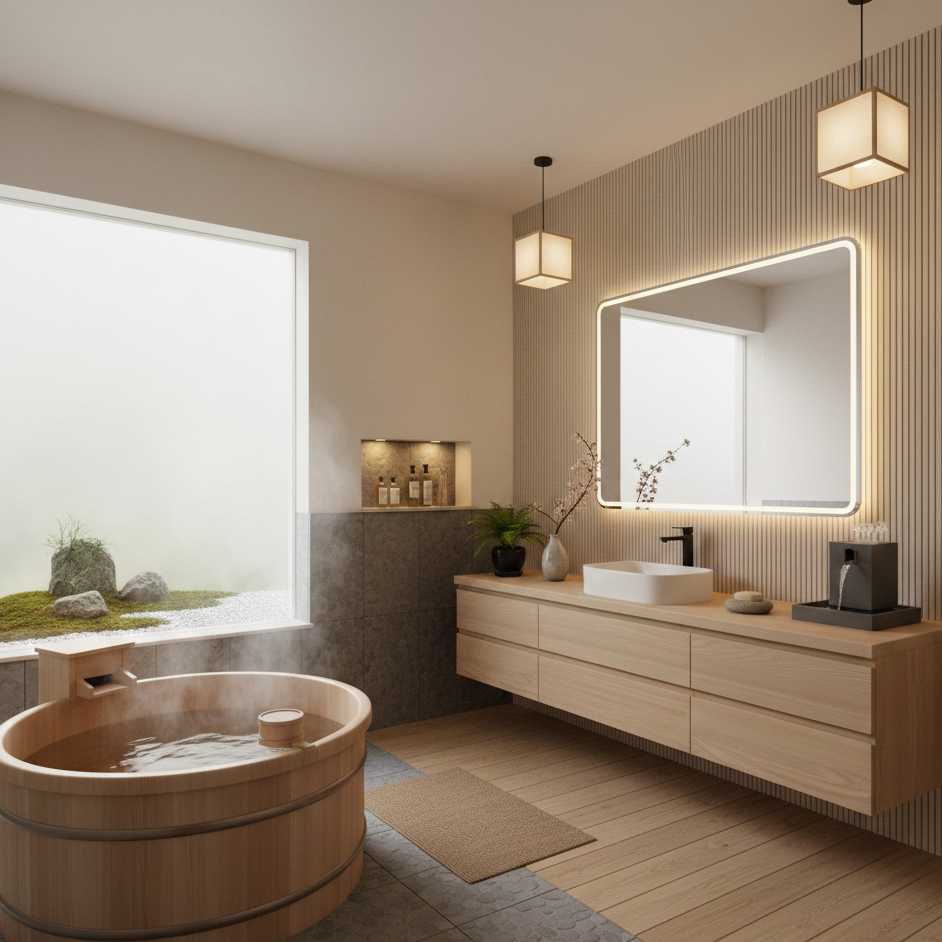
The most iconic element of any Zen-inspired bathroom is the deep soaking tub, or ofuro. Traditionally made of aromatic hinoki wood, these tubs are deeper and shorter than standard Western bathtubs, designed to allow the bather to sit upright with water reaching up to the chin. While authentic hinoki wood is a luxury that offers a divine citrus-like scent when wet, modern interpretations can be found in copper, stone, or high-quality acrylic. The key is to choose a freestanding tub that acts as the focal point of the room. Placing the tub near a window with a view of greenery or a small rock garden can further enhance the feeling of being immersed in nature, which is a core tenet of Japanese design.
Emphasizing Natural Materials and Textures
Japanese interiors lean heavily on the “Wabi-sabi” philosophy, which finds beauty in imperfection and the natural aging process. To reflect this in your bathroom, opt for materials that feel organic and tactile. Consider using slate or pebble tiles for the flooring to mimic the feel of a riverbed under your feet. Wood accents are essential for adding warmth to the space; teak, bamboo, and cedar are excellent choices due to their moisture resistance. Using wood for vanities, wall paneling, or even a slatted floor mat (known as a sunoko) can instantly soften the hard surfaces of a bathroom and create a more grounded, earthy atmosphere that resonates with Zen principles.
The Power of a Neutral Color Palette
A serene space requires a visual language that is quiet and unpretentious. The color palette of a Japanese style bathroom should be inspired by the earth and the sky. Think of soft beiges, warm wood tones, cool slate grays, and off-whites. Avoid bold, jarring colors or busy patterns that can clutter the mind. Instead, use different textures within the same color family to create depth and interest. For example, a matte charcoal tile paired with a smooth light oak vanity provides a sophisticated contrast without breaking the sense of calm. The goal is to create a monochromatic or low-contrast environment that allows the eye to rest and the mind to settle.
Strategic Lighting for a Calming Ambience
Lighting plays a crucial role in setting the mood for a Zen-inspired space. Harsh, overhead fluorescent lights are the antithesis of relaxation. Instead, aim for layers of soft, diffused light. Shoji-style pendant lights or wall sconces with rice paper shades provide a warm, ethereal glow that mimics natural sunlight. If possible, maximize natural light during the day through frosted glass windows or skylights. For evening use, consider installing dimmer switches so you can lower the light levels during a soak. Adding small LED strips under floating vanities or behind mirrors can create a “halo” effect, making the heavy elements of the room appear as if they are floating, which adds to the overall sense of lightness and peace.
Minimalism and the Art of Storage
A cluttered space leads to a cluttered mind, which is why minimalism is a non-negotiable aspect of Japanese design. In a Zen bathroom, every item should have a dedicated home, preferably out of sight. Floating vanities with clean lines and handle-less drawers help maintain a sense of openness. Use recessed wall niches in the shower or near the tub to hold essential soaps and oils, preventing plastic bottles from cluttering the edges of the bath. When selecting accessories, choose quality over quantity. A single ceramic vase with a lone branch of cherry blossom or a simple stone soap dish is far more effective than a counter full of decorative trinkets. The “less is more” approach ensures that the architectural beauty of the room remains the star of the show.
Incorporating Greenery and the Outdoors
Connecting with nature is a fundamental part of achieving a Zen state. Since many bathrooms don’t have the luxury of a private outdoor courtyard, you can bring the outdoors in through strategic greenery. Moisture-loving plants like ferns, moss, or bamboo thrive in bathroom environments and add a vibrant, living energy to the space. If you have the space, a small interior rock garden with a few carefully placed stones and raked gravel can serve as a meditative focal point. Even if you only have room for a single potted bonsai on the vanity, that touch of green acts as a reminder of the natural world, reinforcing the sense of tranquility and balance that defines Japanese style.
The Functional Split: Separating the Toilet
In traditional Japanese home architecture, the toilet is almost always located in a separate room from the bathing area. This is done for reasons of hygiene and to preserve the bathroom as a pure space for relaxation. If you are remodeling, consider creating a small “water closet” for the toilet. If a structural change isn’t possible, you can use a frosted glass partition or a wooden slat screen to visually separate the toilet from the vanity and tub. This physical separation allows the main part of the bathroom to remain a dedicated sanctuary, free from the more utilitarian functions of the household, thereby enhancing the “spa-like” feel of the room.
Sensory Details: Scents and Sounds
To complete your Zen-inspired transformation, consider the sensory details that go beyond the visual. The scent of a Japanese bathroom is often defined by woodsy and clean aromas. Essential oils like hinoki, sandalwood, or eucalyptus can be used in a diffuser to create an olfactory experience that triggers immediate relaxation. Additionally, the sound of water is highly therapeutic. If your bathroom is located in a noisy area, a small tabletop water fountain can provide a gentle background trickle that masks external noise. High-quality, plush towels in neutral tones and a traditional cotton yukata (robe) hanging on a wooden hook add the final touches of comfort, ensuring your transition from the bath back to the world is as gentle as possible.
Final Thoughts on Creating Your Zen Space
Designing a Japanese style bathroom is an exercise in intentionality. It requires you to strip away the unnecessary and focus on the elements that truly contribute to your well-being. By prioritizing natural materials, a deep soaking tub, and a minimalist aesthetic, you create a space that doesn’t just look beautiful on Pinterest but actually improves your quality of life. Whether you are doing a full renovation or simply updating your accessories, the principles of Zen design—balance, harmony, and simplicity—will guide you toward a bathroom that serves as a daily retreat for your body and soul.