Designing a bedroom for a young boy is a unique creative challenge that requires balancing the boundless energy of childhood with the practical needs of a growing individual. It is not just about picking a paint color or buying a bed; it is about curated storytelling through interior design. A successful boy’s bedroom serves as a high-octane playroom by day and a serene, organized sanctuary by night. To achieve this, you must look beyond fleeting trends and focus on a foundation of “fun and functional” elements that can evolve as he does. By integrating clever storage solutions, imaginative themes, and zones dedicated to specific activities, you can create a space that sparks creativity while keeping the inevitable clutter of boyhood at bay.
The Foundation of a Great Layout: Zoning the Space
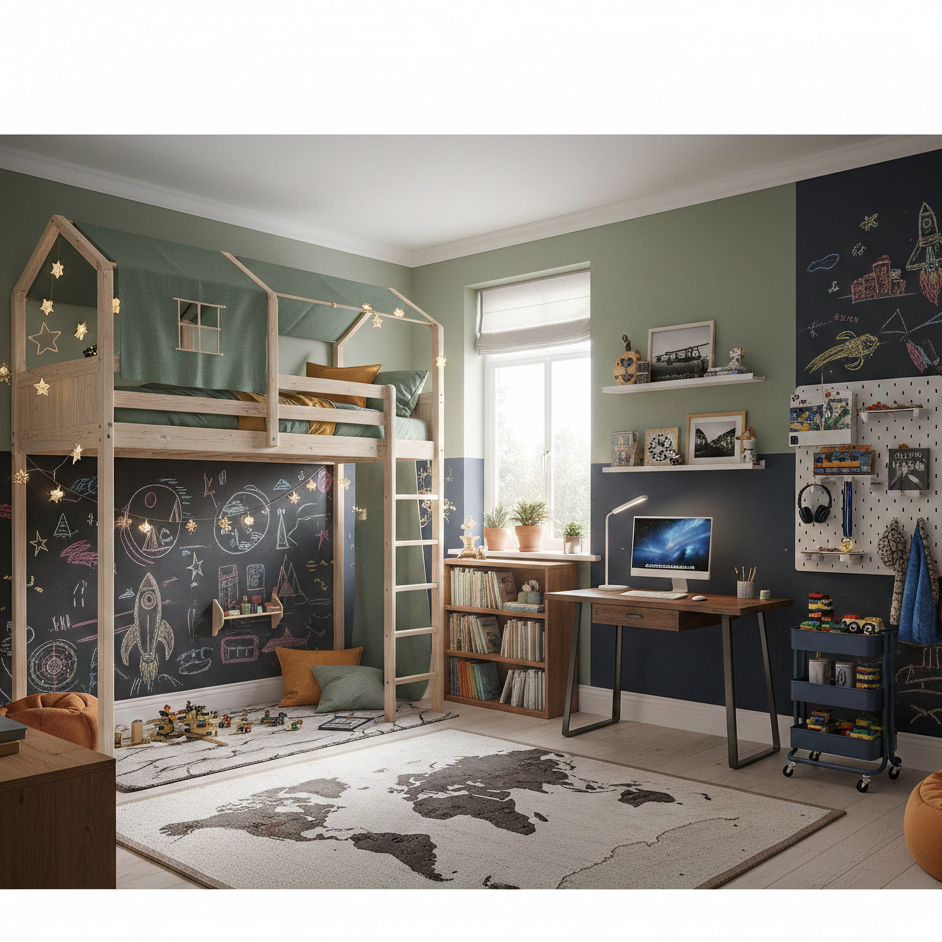
The secret to a functional bedroom lies in the layout. Instead of seeing the room as one large box, visualize it as a series of specialized zones. The Sleep Zone should be the heart of the room, anchored by a bed that feels like a safe harbor. For younger boys, a house-frame bed or a low-profile Montessori-style bed encourages independence and adds a touch of whimsy. As they grow, transitioning to a loft bed can be a game-changer, effectively doubling the usable square footage by opening up the floor space underneath for a desk or a cozy reading nook. The Activity Zone should be kept central and open, providing ample floor space for building block masterpieces, train tracks, or wrestling matches. Finally, the Quiet Zone is essential for fostering a love of learning. A small bookshelf paired with a comfortable bean bag chair or a plush rug creates an inviting corner for decompression and reading.
Color Palettes Beyond Basic Blue
While blue remains a classic choice for boys’ rooms, the modern palette has expanded into much more sophisticated and versatile territory. To create a space that feels fresh and energized, consider earthy tones like sage green, terracotta, or a deep navy paired with crisp white. For a high-energy “fun” factor, slate gray works beautifully as a backdrop for vibrant pops of mustard yellow or electric orange. If you want a room that grows with him, consider a “muted masculine” approach using charcoal, wood grain, and beige. This neutral base allows you to swap out themed bedding or posters as his interests shift from dinosaurs to outer space without needing a complete repaint. Using a chalkboard wall as an accent is another brilliant way to incorporate color and function, giving him a massive canvas to express his daily artistic whims.
Furniture That Works Twice as Hard
In a young boy’s room, every piece of furniture should ideally serve more than one purpose. Multifunctional furniture is the cornerstone of a functional space. Consider a captain’s bed with built-in drawers underneath to eliminate the need for a bulky dresser, or a headboard with shelving for his favorite “treasures” and a nightlight. Desks are no longer just for homework; they are battle stations for gaming and laboratories for science kits. Look for adjustable-height desks that can grow alongside him, ensuring ergonomic comfort from age six to sixteen. Floating shelves are another functional win, as they utilize vertical space for decor and books while keeping the floor clear and easy to vacuum. When selecting furniture, prioritize durability—opt for solid woods or high-quality laminates that can withstand the occasional stray toy or heavy-handed play.
Storage Solutions for Maximum Organization
The biggest hurdle in any kid’s room is the “toy-nado.” To maintain a functional space, you need a storage system that is so simple a child can actually use it. Clear plastic bins are excellent for visibility, but for a more Pinterest-worthy aesthetic, consider canvas bins or woven baskets with labels. Use icons or pictures on the labels for younger boys who aren’t reading yet; this empowers them to participate in clean-up time. A “rolling cart” system is a fantastic modern addition, allowing him to move his art supplies or Lego collection from the desk to the bed and back again. Wall-mounted pegboards have also become a staple in functional design, offering a customizable way to hang headphones, sports gear, and hoodies. By getting items off the floor and onto the walls, the room instantly feels larger and more organized.
Infusing the “Fun” with Imaginative Themes
Functionality keeps the room running, but the “fun” is what makes it his favorite place on earth. The key to a themed room is subtlety and texture. Instead of a literal “Race Car” room with a car-shaped bed that he might outgrow in two years, try a “Vintage Garage” theme. Use industrial metal shelving, framed prints of classic blueprints, and a checkered rug. If he loves the outdoors, go for a “Mountain Explorer” vibe with a tent-style canopy over the bed, forest-green accents, and a faux-fur rug. These sophisticated takes on themes allow for a high-end look while still catering to his current passions. Wall decals are a parent’s best friend here—they are inexpensive, easy to apply, and even easier to peel off when he decides he’s “too cool” for astronauts and wants to transition to a minimalist skater aesthetic.
Lighting: Setting the Mood for Play and Rest
Lighting is often overlooked, but it is crucial for defining the mood of a room. A single overhead light is rarely enough. Layered lighting is the professional secret to a functional space. Start with a bright ceiling fixture for playtime and cleaning. Then, add task lighting, such as a sturdy LED lamp on the desk for drawing or reading. Finally, incorporate accent lighting to create a “fun” atmosphere. Neon signs with his name or a favorite phrase add a cool, modern glow, while string lights or “star projectors” can turn the ceiling into a galaxy at night, helping soothe any fears of the dark. Smart bulbs that change color can also be a hit, allowing him to turn his room “red” for a superhero mission or “blue” for a deep-sea adventure at the touch of a button.
Flooring and Rugs: The Foundation of Play
Since young boys spend a significant amount of time playing on the floor, the choice of rug is both a design and a comfort decision. A low-pile rug is usually the best bet, as it’s easier to clean and provides a stable surface for building towers or racing cars. Look for rugs with “visual interest” that double as toys, such as a world map, a city street layout, or even a simple geometric pattern that can be used for “the floor is lava” games. Material-wise, synthetic fibers like polypropylene are stain-resistant and durable, making them ideal for high-traffic areas. If the room has hard floors, consider interlocking foam mats for a dedicated play corner—they provide excellent cushioning and can be swapped out easily if they get worn down.
Personalization and the Final Touches
A room only truly becomes a “home” when it reflects the personality of its inhabitant. Encourage your son to be part of the decorating process by letting him choose between two or three parent-approved options for a duvet cover or a piece of wall art. Create a “Gallery Wall” using inexpensive frames to display his latest school projects, certificates, or polaroid photos with friends. This not only boosts his self-esteem but also makes the space feel personal and lived-in. Incorporating a growth chart on a wooden plank or directly on a door frame is a nostalgic touch that documents his journey through childhood. Remember, the most functional and fun room is one that feels like a reflection of his unique spirit—a place where he can dream big, play hard, and rest deeply.