Imagine waking up to the soft glow of dawn filtering through sheer linen curtains, the air smelling faintly of salt and cedar. You don’t need a literal house on the sand to capture the restorative essence of the ocean. Creating a coastal bedroom is about more than just a color palette; it is about curated serenity and an intentional connection to the natural world. This design philosophy focuses on light, texture, and a sense of openness that invites you to breathe deeper the moment you cross the threshold. Whether you live in a bustling city or a quiet suburb, transforming your sleeping quarters into a maritime sanctuary provides a daily mental vacation that grounds your spirit and resets your internal clock.
The Foundation of Coastal Design: Light and Air
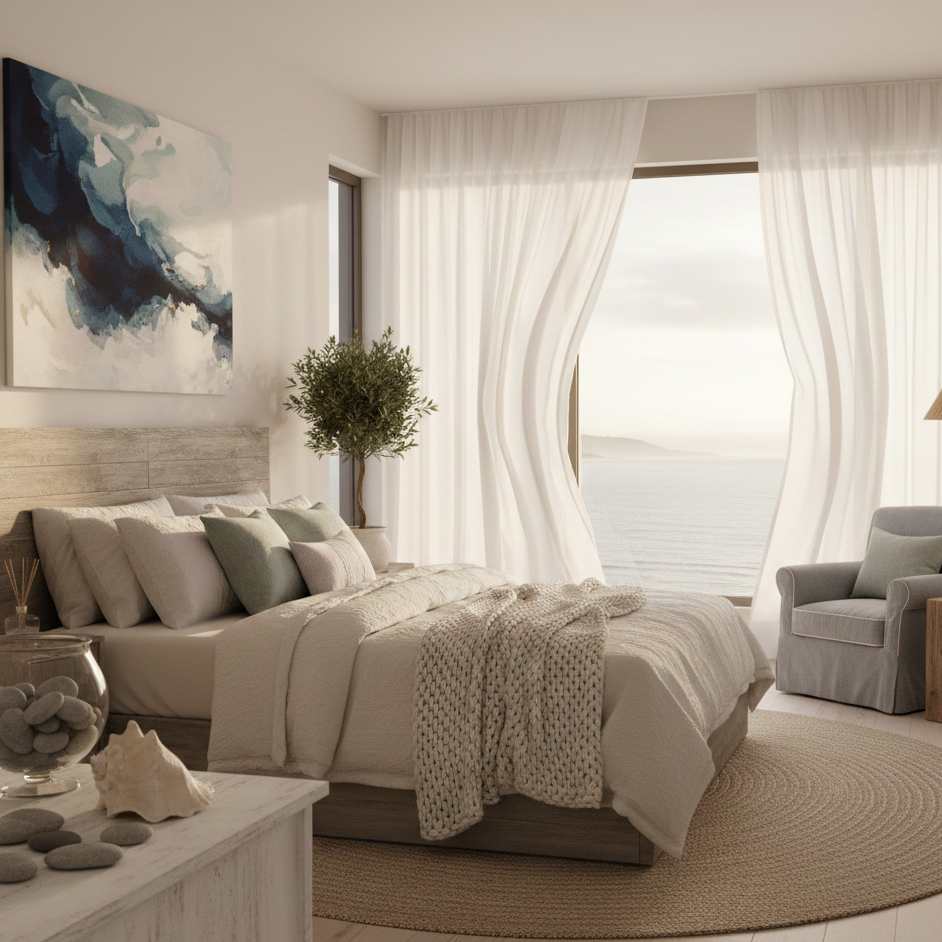
The hallmark of any successful coastal bedroom is an abundance of natural light. Coastal interiors aim to blur the lines between indoors and out, making the room feel like an extension of the horizon. Start by stripping away heavy drapes or dark blinds that block the sun. Instead, opt for lightweight window treatments like woven bamboo shades or gauzy white panels that flutter in the breeze. If your room lacks large windows, you can mimic the effect of sunlight by using mirrors strategically placed across from light sources to bounce brightness into every corner. The goal is to create a space that feels expansive and airy, reflecting the limitless feeling of looking out over the Atlantic or Pacific.
Choosing a Palette Beyond Basic Blue
While blue and white are the traditional pillars of nautical decor, a modern coastal aesthetic explores a much wider spectrum of the seaside. Think of the colors found in a handful of beach sand or the weathered grey of driftwood. A base of warm whites, creams, and sandy beiges creates a soft, neutral canvas that feels sophisticated rather than kitschy. You can then layer in “sea glass” tones—muted teals, soft sage greens, and pale lavenders—to add depth without overwhelming the senses. Avoid high-contrast color schemes that feel jarring; instead, lean into monochromatic layers that transition smoothly from one shade to the next, much like the gradient of a shoreline.
Texture: The Secret to a Cozy Coastal Vibe
In a room where the color palette is intentionally restrained, texture becomes the primary storyteller. To prevent a white-on-white room from feeling sterile, you must introduce a variety of tactile elements. Consider a jute or sisal rug underfoot to provide a grounding, earthy feel. On the bed, layer different fabrics such as a chunky knit throw, a crisp cotton duvet, and linen pillowcases. These natural fibers are breathable and age beautifully, mimicking the organic imperfections found in nature. Wicker or rattan furniture pieces, such as a headboard or an accent chair, add a vintage coastal charm while introducing warmth through their golden, honey-toned weaves.
Furniture with a Weathered History
Coastal style thrives on pieces that look like they have a story to tell. Avoid the “matching set” look often found in furniture showrooms, which can feel stiff and impersonal. Instead, mix and match pieces with different finishes. A whitewashed dresser pairs beautifully with a dark wood nightstand, suggesting a collection gathered over years of seaside living. Look for furniture with clean lines but soft edges—nothing too sharp or overly ornate. Distressed finishes, where the wood grain or paint looks slightly worn by time and salt air, add an authentic “lived-in” quality that makes the bedroom feel immediately comfortable and unpretentious.
Bringing the Outdoors In: Natural Accents
Decorating a coastal bedroom requires a “less is more” approach. The goal is to curate a few meaningful objects rather than cluttering surfaces with mass-produced beach trinkets. A single large piece of driftwood mounted above the bed can serve as a stunning focal point. A glass vessel filled with smooth river stones or a collection of oversized conch shells on a bookshelf brings the raw beauty of the coast into your personal space. Incorporating greenery is also essential; a potted olive tree or a lush fiddle-leaf fig adds a vibrant pop of life and reinforces the connection to the natural environment.
The Importance of Scent and Sound
A true “escape to the sea” engages all the senses, not just the eyes. To complete the atmosphere, consider the invisible elements of your room. High-quality candles or diffusers with notes of sea salt, eucalyptus, driftwood, or citrus can subtly signal to your brain that it is time to relax. If you live in a noisy area, a white noise machine that mimics the rhythmic crashing of waves can mask city sounds and lull you into a deeper sleep. These small sensory details are what bridge the gap between a room that just looks like a beach house and a room that actually feels like a coastal retreat.
Creating a Reading Nook by the “Shore”
If space permits, every coastal bedroom should feature a dedicated corner for quiet reflection. A slipcovered armchair in a durable denim or canvas fabric creates the perfect spot to curl up with a book. Add a small side table made of reclaimed wood to hold a cup of tea, and ensure there is adequate lighting for evening reading. This nook serves as a secondary sanctuary within your bedroom, emphasizing the idea that this room is a place for restoration and leisure, far removed from the stresses of work and digital screens.
Lighting: From Sun-Drenched to Soft Glow
As the sun sets, the way you light your coastal bedroom changes the mood from energetic to intimate. Avoid harsh overhead lighting which can make a room feel flat. Instead, use a layered approach with bedside lamps featuring ceramic bases in watery glazes or pendant lights made of woven seagrass. Edison bulbs with a warm amber glow can mimic the soft light of a bonfire on the beach. By controlling the light levels, you can transition your space from a bright, breezy morning retreat to a cozy, candlelit cocoon as night falls.
The Art of the Coastal Wall
When it comes to wall art, think about “abstract” rather than “literal.” Instead of a painting of a lighthouse, consider an oversized abstract canvas that uses washes of blue and grey to evoke the feeling of a stormy sea. Framed botanical prints of seaweed or coral provide a classic, sophisticated look. Another beautiful option is to hang a series of black-and-white photographs of your favorite coastline, which adds a personal touch and a sense of nostalgia. Keeping the frames simple—either thin black metal or natural light wood—keeps the focus on the imagery and maintains the room’s uncluttered aesthetic.
Conclusion: Your Personal Tide
Ultimately, a coastal bedroom is a reflection of your own relationship with the water. It is a space designed to ebb and flow with your needs, providing a quiet backdrop for rest and a bright start to your mornings. By focusing on natural materials, a soft palette, and meaningful textures, you create more than just a decorated room; you create an emotional experience. As you close your door at the end of a long day, the soft colors and organic shapes should act as a visual exhale, reminding you that no matter how chaotic the world outside may be, your personal escape to the sea is always waiting for you.