The allure of the coast has a way of staying with us long after the sand has been washed from our toes. There is a specific, quiet magic found where the land meets the sea—a sense of infinite horizon, the rhythmic lull of the tides, and a palette of colors that feels both expansive and intimate. Bringing that feeling into the heart of your home is more than just a design choice; it is a commitment to a lifestyle defined by ease, light, and natural beauty. Coastal living rooms are not merely rooms decorated with seashells; they are sanctuaries built on the principles of relaxation and refined style. Whether you live in a high-rise apartment miles from the shore or in a cottage overlooking the Atlantic, the coastal aesthetic offers a timeless way to create a space that breathes.
To truly master the coastal living room, one must first understand that this style is rooted in the environment. It is about blurring the lines between the indoors and the outdoors. In a successful coastal space, the architecture and the decor work together to maximize natural light and celebrate organic textures. This doesn’t mean you are restricted to a single “look.” Coastal design has evolved into several distinct sub-genres, ranging from the crisp, tailored elegance of Hamptons style to the rugged, weathered charm of a Pacific Northwest retreat, or even the eclectic, sun-drenched vibes of a Mediterranean villa. Regardless of the specific direction you take, the core elements remain the same: a focus on comfort, a light-filled atmosphere, and a deep appreciation for the natural world.
The Foundation: Color Palettes Inspired by the Shore
The most immediate way to evoke the coast is through a carefully curated color palette. Forget the stereotypical bright navy and stark white of traditional nautical themes; modern coastal design favors a much more nuanced approach. Think of the colors you see on an overcast morning at the beach. Start with a base of soft, warm whites or sandy beiges. These “foundational neutrals” act as a canvas, reflecting light and making even small living rooms feel airy and expansive. Avoid cool, clinical whites that can feel harsh; instead, opt for shades with a hint of cream or grey to add depth and warmth.
Once your foundation is set, layer in the colors of the sea and sky. This is where you can truly personalize the space. Soft seafoam greens, muted teals, and watery aquas bring a sense of tranquility. If you prefer a more sophisticated look, consider deep indigo or slate grey to ground the room. These darker tones work beautifully on a single accent wall, in the upholstery of a statement chair, or through decorative textiles. For a touch of warmth that mimics the sun setting over the dunes, incorporate accents of pale coral, dusty terracotta, or buttery yellow. The key is to keep these colors “muddy” or desaturated so they feel like they’ve been softened by the salt air and sun.
Textures and Materials: Bringing the Outdoors In
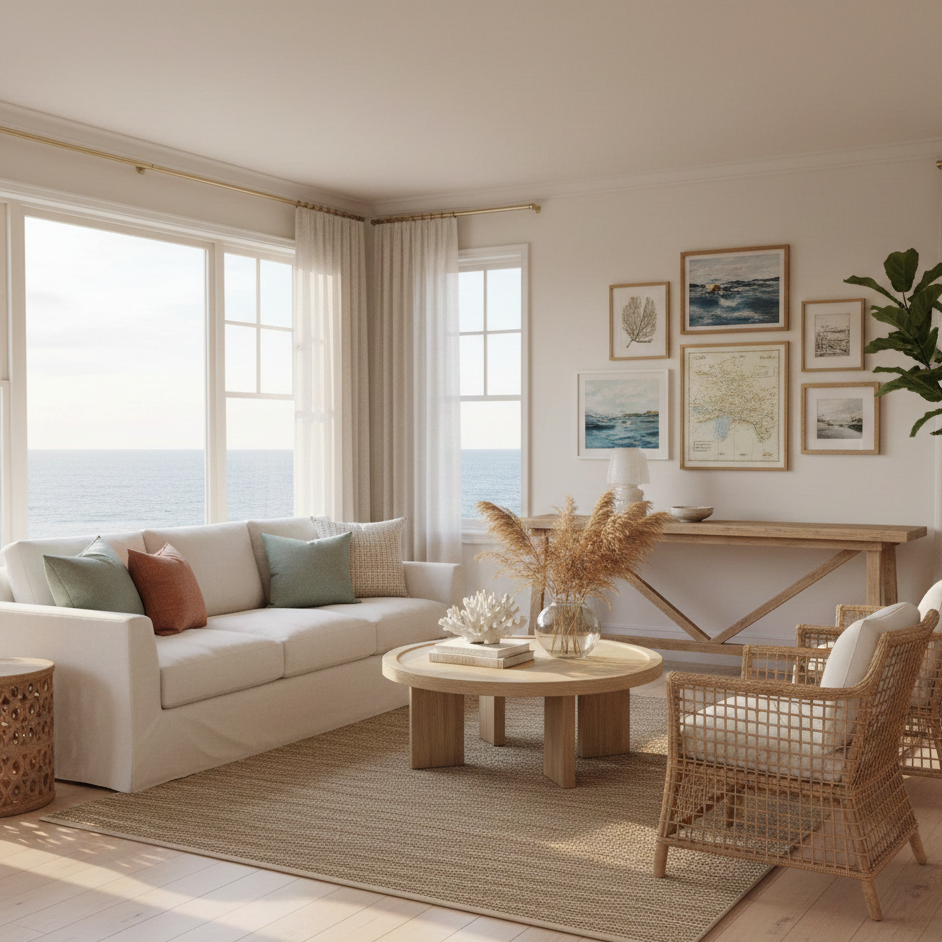
In a coastal living room, touch is just as important as sight. Texture is what prevents a neutral room from feeling flat or boring. To mimic the tactile experience of the beach, you want to prioritize natural, organic materials. Start from the ground up with a jute or sisal rug. These fibers provide a wonderful earthy texture and are incredibly durable, making them perfect for high-traffic areas. If you find jute too scratchy underfoot, try layering a softer wool rug in a pale blue or cream on top of a larger seagrass piece to create a cozy, tiered look.
Furniture should feel substantial yet relaxed. Look for pieces made from light-toned woods like white oak, ash, or reclaimed pine. The grain of the wood adds a layer of visual interest and connects the room to the forest and the shore. Woven elements are also non-negotiable in coastal design. Rattan, wicker, and cane chairs or storage baskets add a rhythmic texture that feels quintessentially breezy. For your main seating, slipcovered sofas are the gold standard of coastal living. Not only do they offer a relaxed, lived-in aesthetic, but they are also incredibly practical. A white or flax-colored linen slipcover can be easily washed, allowing you to embrace the “no-stress” philosophy of seaside life without worrying about a little sand or a spilled drink.
Maximizing Light and Airflow
Light is perhaps the most critical component of a coastal-inspired home. If you have large windows, treat them as the focal point. Avoid heavy, dark drapery that closes the room off. Instead, opt for sheer linen panels or light-filtering woven shades. These allow sunlight to flood the space while providing privacy and a soft, diffused glow. If your living room lacks natural light, you can mimic the effect using mirrors. A large, round mirror framed in driftwood or brass placed opposite a window will bounce light around the room and create the illusion of a larger, more open space.
The concept of “airiness” also extends to how you arrange your furniture. Coastal living rooms should never feel cluttered. Aim for a layout that encourages movement and conversation. Leave plenty of “white space” on your walls and floors. This minimalism isn’t about being cold; it’s about giving the eye a place to rest. Consider the height of your furniture as well; lower-profile sofas and coffee tables keep sightlines open, making the ceiling feel higher and the room more expansive. When you sit down in a coastal living room, you should feel like there is plenty of room to breathe.
Curating Coastal Decor: Art and Accents
When it comes to accessorizing, the goal is to be “curated,” not “themed.” You want to avoid the “souvenir shop” look by choosing a few high-quality pieces that tell a story. Instead of a bowl full of generic craft-store shells, display one or two large, architectural pieces of coral or a singular, beautiful conch shell found on a meaningful trip. Incorporate art that evokes the feeling of the coast without being literal. Abstract paintings in shades of blue and gold, vintage coastal maps, or large-scale black-and-white photography of waves can add a sophisticated edge to the room.
Greenery is another essential element. Plants breathe life into a neutral space and reinforce the connection to nature. For a coastal vibe, look for varieties that thrive in bright light, such as a Fiddle Leaf Fig, a Bird of Paradise, or even a simple olive tree in a terracotta pot. If you don’t have a green thumb, a simple vase filled with dried pampas grass or palm fronds can add height and a wonderful “beachy” texture without the maintenance. Finally, don’t forget the power of scent and sound. A candle with notes of sea salt, citrus, and driftwood can instantly transport your senses to the shoreline, completing the immersive experience of your coastal sanctuary.
The Art of the Coastal Gallery Wall
For those looking to make a statement on Pinterest, a coastal gallery wall is a must-have feature. The trick to a successful gallery wall in this style is consistency in framing and a cohesive color story. Use frames made of natural wood, white-washed timber, or thin gold metal to keep the look light. Mix different types of media—perhaps a framed piece of vintage nautical rope, a watercolor landscape, and a pressed piece of sea fan. When arranging them, don’t worry about perfect symmetry; a slightly organic, asymmetrical layout feels more relaxed and aligned with the coastal aesthetic.
The beauty of a coastal living room lies in its versatility. It is a style that can grow with you, shifting from the bright and playful colors of summer to the cozy, layered textures of a seaside winter. By focusing on a foundation of light, a palette of nature-inspired hues, and a wealth of organic textures, you can create a space that doesn’t just look like a vacation—it feels like one. It is a place where the clock slows down, the shoulders drop, and the simple beauty of the natural world is celebrated every single day.