The allure of the French countryside lies in its effortless ability to marry the rustic with the refined. French Country style—often referred to as Provincial style—is not merely a design trend but a philosophy of living that celebrates history, comfort, and an understated luxury. When you step into a French Country living room, you should feel as though the space has evolved over decades, blending weathered textures with graceful silhouettes. It is a look that feels curated rather than decorated, making it one of the most enduring interior design styles for homeowners seeking a sanctuary that feels both high-end and lived-in.
The Essence of French Provincial Design
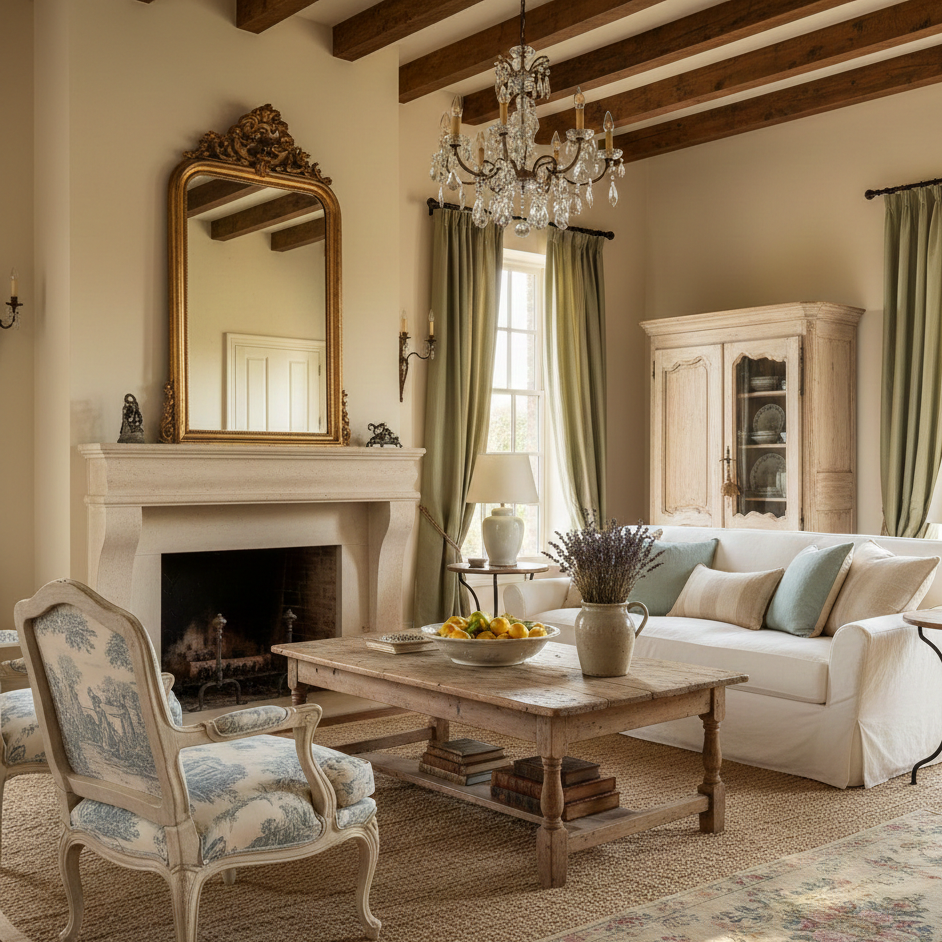
At its heart, French Country style is a balance of opposites. It pairs the ruggedness of exposed wood beams and stone floors with the delicacy of silk drapes and crystal chandeliers. This juxtaposition creates a space that is sophisticated enough for entertaining guests yet casual enough for a quiet afternoon with a book. To achieve this look, one must move away from the “matchy-matchy” furniture sets often found in modern showrooms and instead embrace the charm of mismatched antiques and distressed finishes. The goal is to create a room that feels warm, welcoming, and profoundly personal.
Establishing a Soft and Sun-Drenched Color Palette
The foundation of any French Country living room is its color palette. Unlike the moody tones of Parisian chic, the Provincial look draws inspiration from the landscape of Provence. Think of the soft yellows of ripening wheat, the dusty greens of olive groves, and the muted blues of the Mediterranean Sea. Creamy whites and warm beiges serve as the primary canvas, allowing these subtle pops of color to breathe. When selecting paint for your walls, opt for matte or eggshell finishes in shades like linen, oatmeal, or a very pale butter yellow. These colors catch the natural light beautifully, mimicking the sun-drenched atmosphere of a stone cottage in southern France.
For those who prefer a more neutral approach, a monochromatic palette of varying whites and greys can also work, provided there is plenty of texture to prevent the room from feeling cold. You can introduce deeper accents through furniture and decor—think charcoal, burnt sienna, or a deep navy—but keep the primary surfaces light and airy. This brightness is essential for creating that signature “timeless” feel that characterizes French interiors.
Furniture with Curves and Character
In a French Country living room, furniture is the primary storyteller. The silhouettes are almost always soft and undulating. Instead of the sharp angles and straight lines of mid-century modern design, look for Cabriole legs on coffee tables, scrolled arms on sofas, and carved wood details on armoires. The Louis XV style is a hallmark of this aesthetic, featuring graceful curves that lend an air of femininity to the room.
Upholstery should prioritize comfort without sacrificing form. A Bergère chair—a classic French armchair with exposed wooden frames and upholstered backs and seats—is a must-have for any Provincial-inspired space. Choose fabrics like linen or cotton grain sacks for a more rustic vibe, or opt for velvet if you want to lean into the “elegant” side of the spectrum. Slipcovered sofas are another excellent choice; they offer a relaxed, approachable look that is easy to maintain, perfectly capturing the spirit of a home that is meant to be lived in.
The Power of Distressed Textures and Natural Materials
Nothing kills the French Country vibe faster than furniture that looks brand new and plastic-coated. This style celebrates the “perfectly imperfect.” Look for pieces with a patina—chipped paint, sanded edges, and weathered wood. If you are buying new furniture, look for “distressed” finishes that mimic the wear and tear of time. Whitewashed oak, reclaimed pine, and natural stone are the building blocks of this aesthetic.
Incorporate natural materials wherever possible to ground the room. A large jute or sisal rug provides a coarse, organic base that contrasts beautifully with a soft linen sofa. Stone or brick fireplaces serve as a magnificent focal point, especially if left in their natural state or lightly limewashed to soften their appearance. Wrought iron is another essential element; use it in curtain rods, light fixtures, or small side tables to add a touch of rustic weight to the otherwise light decor.
Textiles: Toile, Stripes, and Floral Motifs
Textiles are where French Country style truly comes to life. Toile de Jouy, the iconic French fabric featuring pastoral scenes in a single color on a white or cream background, is the most recognizable pattern of the genre. Use it sparingly on a single accent chair, a few throw pillows, or floor-to-ceiling drapes to create a sophisticated focal point.
To balance the complexity of toile, introduce simpler patterns like ticking stripes or small-scale ginghams. These patterns bring a farmhouse sensibility to the room and keep the elegance from feeling too stuffy. Floral prints are also welcome, provided they look vintage and slightly faded rather than bright and modern. Layering these textiles—mixing a striped rug with floral pillows and a toile throw—adds depth and a sense of history to the living room.
Lighting: The Crown Jewel of the Room
Lighting in a French Country living room should be a mix of functional and atmospheric. A crystal chandelier is the gold standard for this style. It adds an unexpected touch of glamour to a room filled with rustic wood and stone. The way the light refracts through the glass droplets adds a magical, shimmering quality to the space during the evening hours.
For task lighting, look for table lamps with ceramic or carved wood bases and simple linen shades. Sconces with faux-candle bulbs can be placed on either side of a fireplace or a large mirror to provide a warm, ambient glow. Avoid harsh overhead LED panels or modern track lighting; the goal is to mimic the soft, flickering light of a candlelit manor.
Decorating with Flea Market Finds and Greenery
The finishing touches of a French Country living room should feel like a collection of treasures gathered over time. Scour antique shops and flea markets for oversized gold-leaf mirrors with intricate carvings. A large, leaning mirror not only acts as a piece of art but also helps bounce light around the room, making it feel more spacious.
Incorporating nature is also vital. Large wooden bowls filled with fresh lemons, bundles of dried lavender in stoneware pitchers, and terracotta pots housing olive trees or ferns bring the outdoors in. Decorative accents like vintage birdcages, old leather-bound books, and mismatched porcelain plates displayed on a hutch add to the “shabby chic” charm that makes this style so inviting.
Creating the Perfect Layout for Conversation
French Country design is inherently social. The layout of your living room should encourage conversation and togetherness. Arrange your seating in a way that feels intimate—perhaps two armchairs facing a sofa across a low, wooden coffee table. Avoid pointing all your furniture toward the television; instead, make the fireplace or a large window with a view the center of attention.
If you have an open-concept space, use large pieces of furniture like a sideboard or a sofa table to define the living area. This adds a sense of structure and “old-world” architecture to modern floor plans. Remember that the French Country home is one where functionality meets beauty; every piece of furniture should be comfortable enough to lounge on for hours while still looking like a work of art.
Final Thoughts on Timeless Elegance
Creating a French Country living room is about embracing a slower pace of life. It is about appreciating the grain of the wood, the weave of the linen, and the history behind a vintage find. By focusing on a soft color palette, curved furniture, and a mix of rustic and refined textures, you can transform your home into a timeless retreat that never goes out of style. Whether you live in a bustling city apartment or a suburban house, the Provincial aesthetic offers a way to bring the peace and beauty of the French countryside into your daily life.