Selecting the perfect flooring for a bathroom is one of the most critical decisions in a home renovation or build. Unlike the living room or bedroom, the bathroom environment presents a unique set of challenges that require a delicate balance between high-end aesthetics and rugged performance. Humidity, standing water, and frequent temperature shifts mean that the material you choose must be more than just a pretty face; it must be a functional shield for your subfloor. At the same time, the bathroom floor is often the largest visual surface in the room, meaning it sets the tone for your entire design scheme, whether you are aiming for a sleek modern sanctuary or a warm, rustic retreat.
Prioritizing Performance: Why Moisture Resistance is Non-Negotiable
When exploring bathroom flooring ideas, the first and most important factor to consider is water resistance. Bathrooms are high-moisture zones where spills, splashes, and steam are daily occurrences. Choosing a porous or water-sensitive material can lead to long-term issues like mold growth, warping, or structural rot. This is why porcelain and ceramic tiles have remained the industry standard for decades. Porcelain, in particular, is fired at extremely high temperatures, making it nearly impervious to water and highly resistant to stains and scratches. Beyond its durability, the versatility of porcelain allows it to mimic almost any other material, including natural wood and rare marble, providing the look you want without the maintenance headaches.
The Timeless Appeal of Natural Stone
For those seeking a luxurious, high-end aesthetic, natural stone flooring remains an unrivaled choice. Materials like marble, travertine, slate, and limestone offer a unique, organic beauty that man-made materials struggle to replicate. Each slab of stone tells a story through its veining, color variations, and textures, ensuring that no two bathroom floors are exactly alike. Marble, with its classic white and grey veining, creates an air of opulence and brightness that can make a small bathroom feel much larger. On the other end of the spectrum, slate offers a rugged, earthy vibe with deep charcoals and rust tones that work beautifully in farmhouse or industrial-style homes. However, it is important to remember that natural stone is porous and requires regular sealing to protect it from water damage and staining from bath products.
Modern Innovation: Luxury Vinyl and Laminate
One of the fastest-growing trends in bathroom flooring is the use of Luxury Vinyl Plank (LVP) or Luxury Vinyl Tile (LVT). Modern manufacturing has advanced to the point where vinyl can convincingly replicate the look of hardwood or natural stone at a fraction of the cost. The “waterproof” versions of LVP are particularly popular for bathrooms because they feature a rigid core that won’t swell or buckle when exposed to moisture. Additionally, vinyl is much warmer underfoot than stone or ceramic, making those early morning trips to the bathroom a bit more comfortable. It is also an excellent DIY-friendly option, as many vinyl products feature a click-lock installation system that allows for a quick transformation without the need for messy mortar and grout.
Warming Up the Space: Radiant Heating and Texture
A common complaint about hard-surface flooring is that it can feel cold and clinical. To combat this, many homeowners are integrating radiant floor heating systems beneath their tile or stone. This invisible luxury turns a standard bathroom into a high-end spa experience, providing a gentle warmth that permeates the entire room. Beyond temperature, texture plays a vital role in both safety and style. In a wet environment, “slip resistance” is a key metric. Polished surfaces might look glamorous, but they can become incredibly slippery when wet. Opting for a honed or matte finish, or choosing smaller tiles with more grout lines (like penny rounds or mosaics), increases friction and provides a safer surface for children and the elderly.
Design Trends: Pattern, Color, and Layout
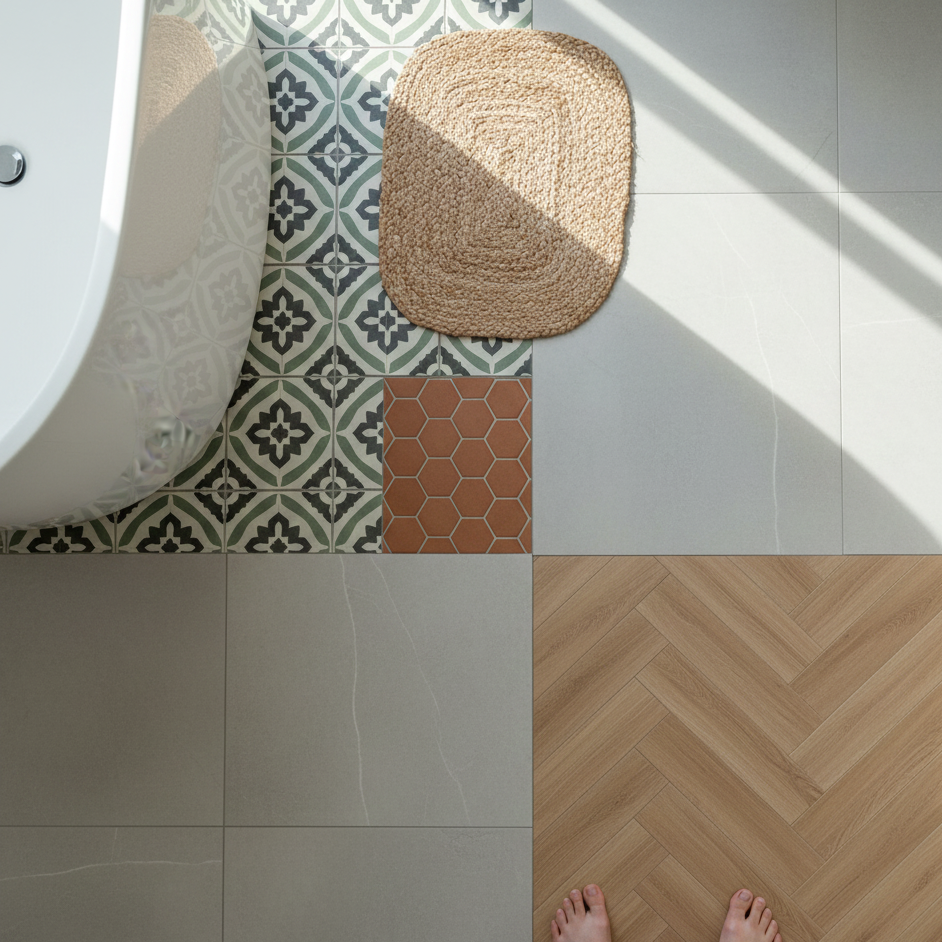
If you want your bathroom floor to be a design focal point, current trends offer plenty of inspiration. The “heritage” look is making a major comeback, with patterned encaustic-style tiles adding character and a vintage feel to even the most modern spaces. These tiles often feature bold geometric patterns or intricate floral motifs in muted tones like dusty blue, sage green, or classic black and white. Another popular layout trend is the herringbone or chevron pattern, which adds a sense of movement and sophistication to rectangular tiles. For a more minimalist approach, large-format tiles are highly sought after; by reducing the number of grout lines, these oversized slabs create a seamless, expansive look that is also much easier to clean.
Sustainable and Eco-Friendly Flooring Choices
As environmental consciousness grows, more homeowners are looking for sustainable bathroom flooring ideas. Cork is a surprising but effective option; it is naturally resistant to mold and mildew, soft underfoot, and harvested from the bark of trees without harming them. However, it does require a high-quality sealant to ensure it stays waterproof. Another eco-friendly contender is linoleum, which is made from natural materials like linseed oil and wood flour. Unlike vinyl, which is a petroleum-based product, linoleum is biodegradable and does not emit harmful VOCs. Its natural antimicrobial properties make it a hygienic choice for family bathrooms, and it is available in a stunning array of vibrant colors and patterns.
Comparison of Popular Bathroom Flooring Materials
| Material | Water Resistance | Durability | Warmth Underfoot | Cost |
| Porcelain Tile | Excellent | Very High | Cold (needs heat) | Mid-Range |
| Luxury Vinyl (LVP) | Excellent | High | Warm | Affordable |
| Natural Marble | Moderate | High | Cold | High-End |
| Slate | High | High | Moderate | Mid-High |
| Engineered Wood | Low-Moderate | Moderate | Warm | Mid-Range |
Maintenance Tips for a Long-Lasting Floor
Regardless of the material you choose, proper maintenance is the key to longevity. For tile and stone, the grout is often the first thing to show wear. Using a high-quality grout sealer and cleaning with pH-neutral solutions will prevent discoloration and cracking. For vinyl and laminate, avoid using steam mops, as the intense heat can sometimes break down the adhesive or the core layers. Instead, a simple damp mop with a mild cleaner is usually all that is needed to keep the floors looking new. By investing a little time in care, you ensure that your bathroom floor remains a beautiful and functional part of your home for decades to come.
Conclusion: Finding Your Perfect Match
Choosing the right bathroom flooring is about finding the intersection of your personal style, your budget, and the practical needs of your household. If you have a busy home with kids and pets, a durable and waterproof LVP or porcelain tile might be the smartest move. If you are designing a primary suite intended for relaxation and luxury, the timeless elegance of marble paired with radiant heating might be worth the splurge. By considering how the material feels under your feet, how it handles the humidity of a hot shower, and how it complements your overall design vision, you can create a foundation that elevates the entire bathroom experience.